Why Mastering Before Distribution Is Important
Amuse X, Masterchannel
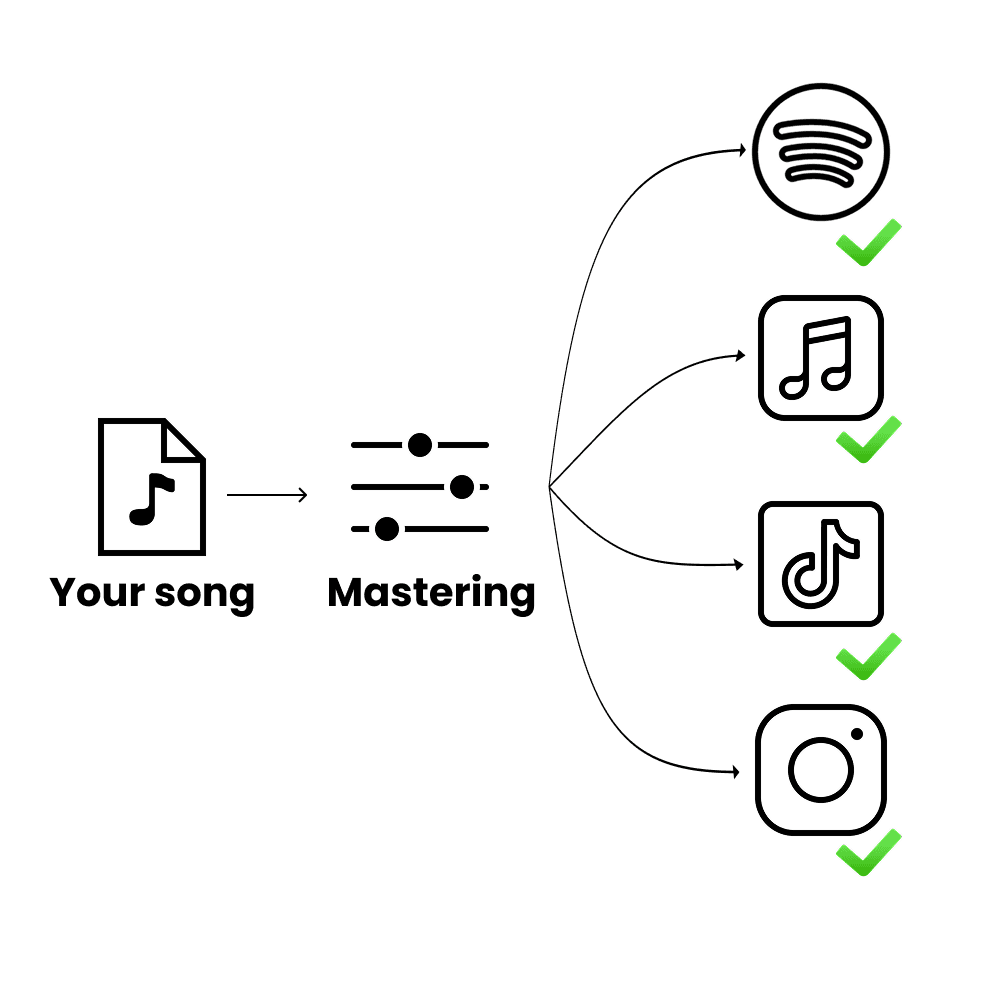
When you’re distributing a song, you’re essentially sending it off to dozens of different streaming services and platforms. However, each streaming platform comes with their set of rules, so it’s important that your song translates well.
 Mastering is the step that ensures that your song actually translates well across all streaming services and platforms.
 Technical Reasons for Mastering
Mastering solves many technical issues that are vital if you want to distribute your music.
Streaming platforms normalize your release
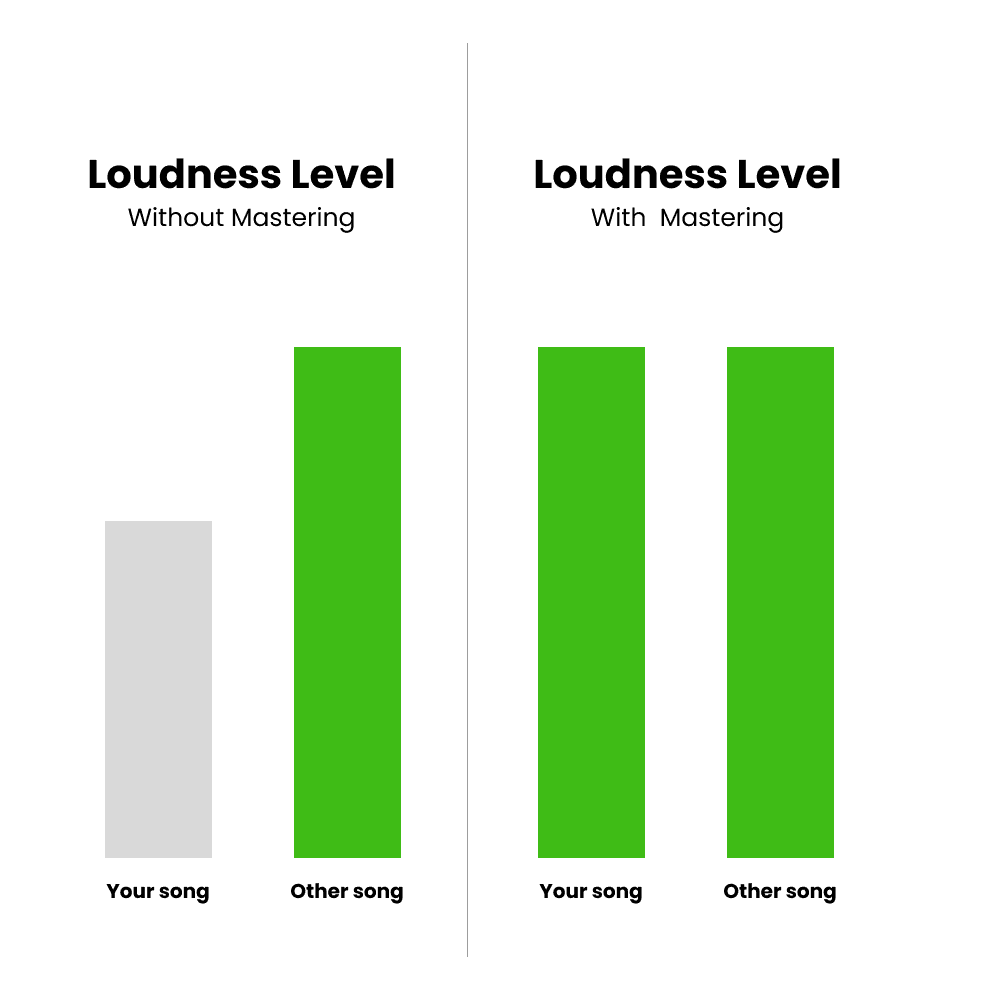
When listeners listen to music on streaming platforms, they don’t want to adjust the playback volume on their phones or devices all the time if a quieter or louder song comes next. This is why streaming platforms automatically measure how “loud” your music sounds in advance, and adjust the playback volume automatically without you even noticing. This is called loudness normalization.
What this means for your audio files is that there is no point of squashing or limiting them to sound louder before distribution, because they will be normalized anyway. At the same time, listeners are used to a certain dynamic “density”, which is why good mastering makes sure that the loudest sections of a song typically sit between -8 to -10 LUFS. Mastering therefore helps with a consistent listening experience, and prevents your song from sounding too compressed or too dynamic compared to other songs.
 2. Your track has to translate everywhere
Phone speakers, AirPods, car stereos, laptop speakers, club PA. None of them behave like your studio monitors. Mastering balances the frequency response of your tracks so they sound as good as possible on every speaker system. Without mastering, you're optimizing your music only for your own room and gambling on the rest. This can result in your listeners being disappointed or skipping your track when listening on their devices.
3. Streaming codecs are unforgiving
Spotify, Apple Music, YouTube and the rest re-encode your file to lossy formats like Ogg Vorbis and AAC. These codecs amplify flaws that already exist in your audio.
The worse your master, the worse it will sound after encoding. Good mastering therefore gets rid of all the problems in your track that would cause even more problems down the line.
4. Hi-fi tiers expose everything
Spotify Lossless and Apple Lossless stream at 24-bit/44.1 kHz FLAC. Every detail is on display. A well-mastered track shines in that format and lets listeners immerse themselves in your music. An unmastered one shows every weakness with brutal accuracy, preventing your listeners from enjoying the additional level of detail.
The listening experience
After you’ve distributed your song, an important aspect is to actually get people to listen to your song. If a song is not mastered, there is a higher chance of it sounding “off” compared to other songs.
1. Playlist curators skip what sounds off
Editorial and independent curators go through dozens of submissions a day. If your song lands next to a polished release and feels duller, thinner, or quieter, it loses momentum before they hear the chorus. Curators reach for what fits the soundscape they already trust, and an unmastered track rarely does.This means an unmastered track might not get the promotional opportunities it could have gotten if mastered well.
2. Listeners hear "amateur" before they hear "amazing"
Streaming audiences are used to listening to professional-sounding songs. They might not consciously think "this song is unmastered," but they feel it and skip it. The skip rate within the first 30 seconds is one of the strongest signals Spotify's algorithm measures, so a weak master translates directly into worse algorithmic reach.
This means that a poorly mastered song never gets the chance to reach its full audience potential.
3. Catalog cohesion matters more than you think
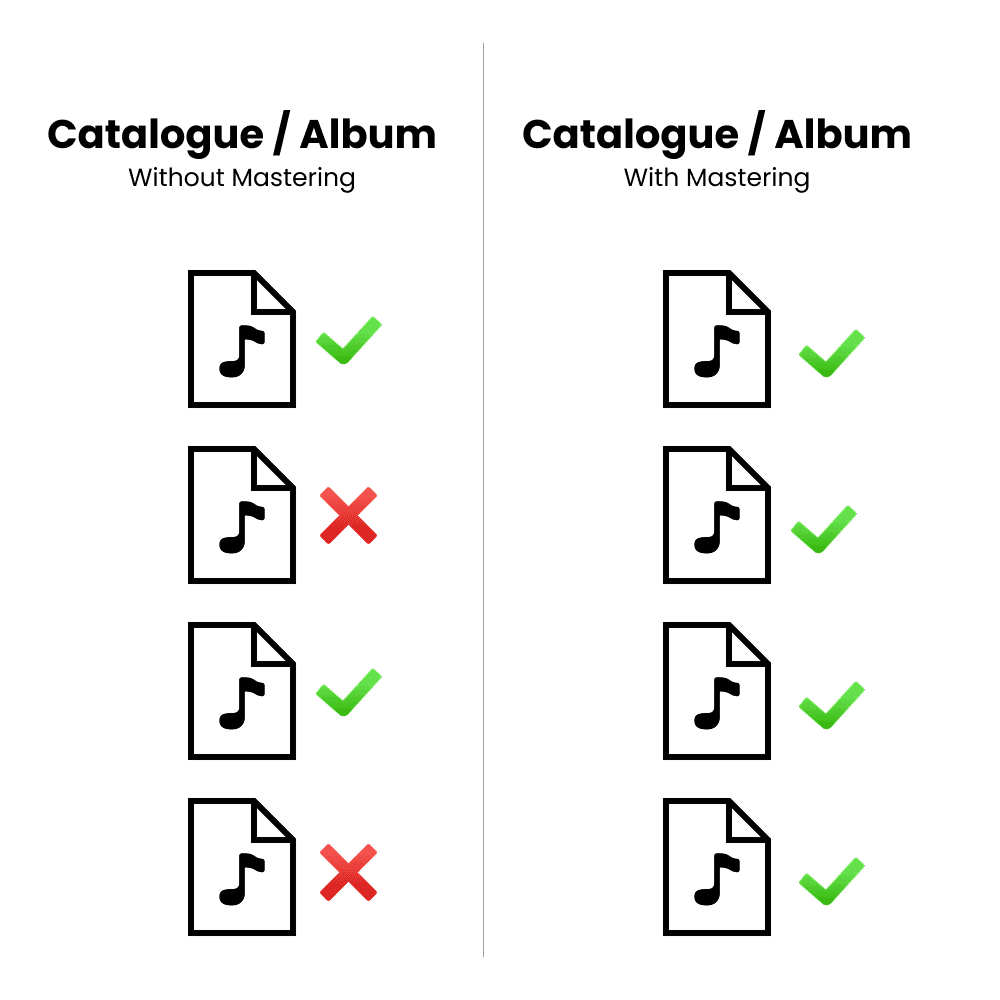
When a listener clicks your artist page or lets your album, or catalogue autoplay, level and tone shifts feel jarring. Mastered releases sit together as one body of work, whereas unmastered ones make your discography sound like demos lined up next to singles.
Good mastering fixes that by glueing everything together and giving your music a consistent sonic identity, so users can focus completely on your music.
Don't forget– Amuse members, can master music for $5.99 per track, directly in the Web app. Making it one less thing to think about before release day. Not on Amuse yet? Join now.