Tips · November 25, 2026
What to do if your music gets stolen or misused
By Amuse
Don’t worry, you’re not on your own, we are here to help! Amuse is the digital music distributor that helps independent artists release their music, protect their work, and build lasting careers. With reliable technology, rigorous content review, and real people behind every release, we take music as seriously as the artists we serve. We've run an in-house anti-fraud team since 2019, every release from a new account gets a human review, and our team checks streaming data every day for impersonation, reuploading already released music, and fake streams.
Key takeaways
The best protection is set up before anything happens with clear ownership, registered rights where possible, and a distributor that reviews content before it goes live.
Act fast, but gather evidence first, including links, screenshots, and dates.
Most stolen or misused music can be removed through the platform's own copyright and takedown tools.
Make sure you have a distributor with a dedicated support team, like Amuse. Report it to the distributor, and if it's on your Amuse release, contact our support team.
How music gets stolen or misused
Knowing what situation you're in tells you what partner to contact.
Uploads under another name. Someone takes your track and distributes it as their own, sometimes with new artwork or a slightly changed title.
Impersonation. A release appears on your artist profile that you didn't make, or someone uploads under a name that copies yours.
Unlicensed samples or copying. Part of your recording or composition shows up in someone else's song without permission or credit.
Unauthorized use on social and video. Your music is used in videos, ads or streams, and someone else claims the revenue.
Fake streams on your music. Bots or "guaranteed plays" services push artificial streams to your tracks, sometimes without your knowledge. Which can lead to withheld royalties or removals, even though you did nothing wrong.
What to do if it happens to you
Gather evidence: Save links, take screenshots, and note release dates, the uploader's name and the label or distributor shown on the store page. Keep your own project files, stems and earliest release dates handy. They prove the music came from you.
Work out who distributed it: Most stores show the label or content provider on a release. That tells you which distributor is responsible for removing it.
Report it on the platform: Spotify, Apple Music, YouTube, TikTok, SoundCloud and others all have copyright or content reporting forms. In the US, this is usually a DMCA takedown notice. Be specific: the exact URL, what's yours, and how you can prove it.
Contact the distributor behind the release: Reputable distributors take infringement reports seriously and can pull content from every store at once. If the release came through Amuse, contact our support team and we'll investigate.
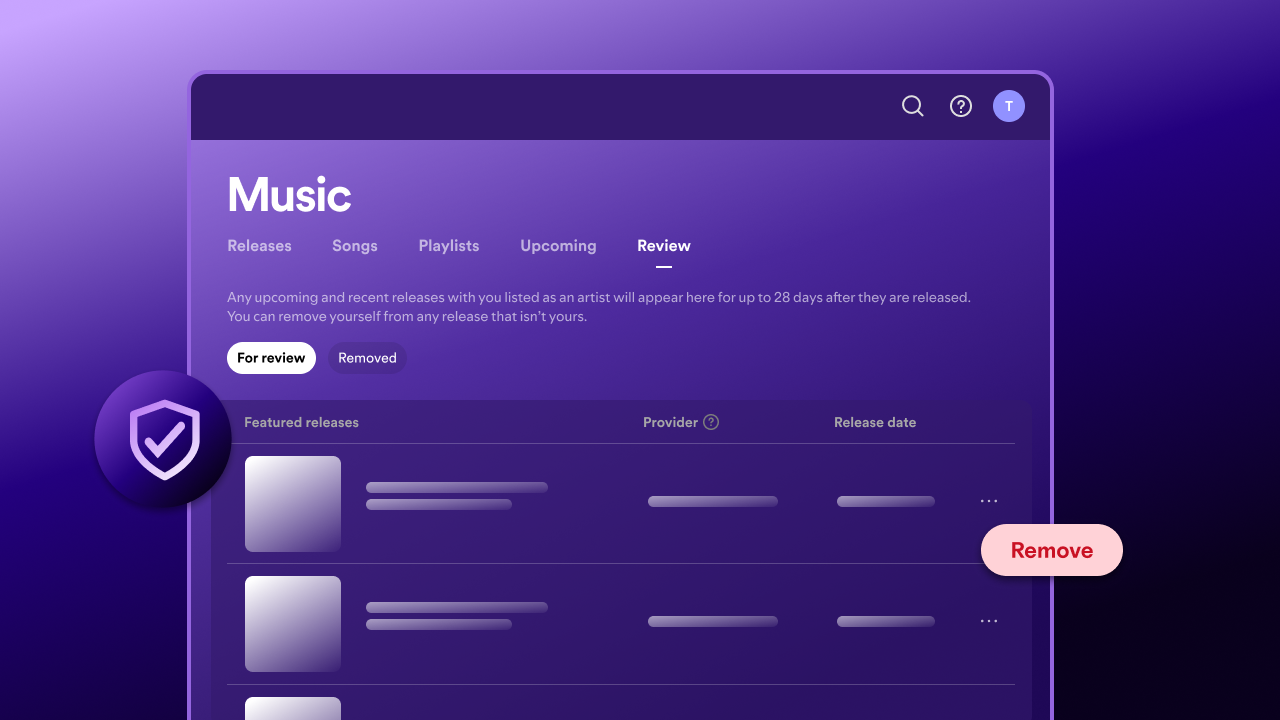
Fix wrong-profile releases: If music that isn't yours appears on your Spotify profile, turn on Spotify's new Artist Profile Protection. You can remove yourself from releases before they go live or up to 28 days after. For other stores, see our help guide on releases on the wrong artist page.
Check your streams: If you suspect fake streams on your tracks, artists distributing their music through Amuse can open Stream Check to see which tracks Spotify flagged for artificial activity, plus advice on what to do next.
How to protect your music before it happens
Put splits and agreements in writing. Split sheets and producer agreements prevent the "who owns this?" fights that often start misuse claims.
Claim your artist profiles. Verified profiles on Spotify, Apple Music and other stores give you more control over what appears under your name.
Keep your files and dates organized. Session files, stems and release dates are your strongest evidence.
Avoid "guaranteed streams" services. They're the most common source of artificial streams, and the penalties land on your music.
Choose a distributor that reviews content. Open platforms that accept anything make it easier for others to upload your work. A distributor, like Amuse, that checks who is releasing and whether they hold the rights stops much of this before it starts.
Register your copyright where you can. In most countries you own copyright the moment you create a work. In the US registration matters, through our partnership with Cosynd, Amuse artists can register works with the US Copyright Office.
How Amuse protects your music
The best takedown is the one you never have to file, that's why we built protection into our own distribution supply chain, rather than relying only on the streaming services to clean up afterwards.
Human review for new accounts. Every release from a new self-service account is checked by a person, backed by our in-house software.
Robocop, our automated content review. Each release is screened on audio, cover art, metadata, and rights before it reaches the streaming platform.
A dedicated anti-fraud team since 2019. The team reviews streaming data every day for repeat aliases, suspicious metadata, coordinated streaming and impersonation attempts.
An artist-name watchlist. We get alerted when new accounts try to release under questionable names or aliases.
Upload limits. Caps per hour, day and week discourage mass-produced uploads.
Stream Check. A free dashboard that shows Amuse artists which tracks Spotify flagged for artificial streams, so you can act before it hurts your catalog.
Between Q1 and Q4 2024, streams Spotify deemed artificial on Amuse fell by 70%, while our average release lead time dropped by 93%. Releases from accounts that pass every check typically clear in under 24 hours. Safety and speed don't have to be a trade-off.
When you choose where to distribute, ask one question: is your distributor part of the problem, or part of the solution?
At Amuse, we review content before it goes live, watch for impersonation and fake streams every day, and give you the tools to see what's happening with your music.
Are you tired of not having the support you need as an independent artist? It’s easy to switch to Amuse and transfer all your tracks without losing any streams with our Release Importer.
Sources
Related
Industry · November 17, 2026
Spotify Announces Artist Profile Protection for All Artists: What It Is and How to Use It
September 25, 2026
What is the best music distributor to transfer your songs from one distributor to another (Comparison)
How To · May 14, 2026
How to make a music video on a budget (in 2026)

Tips · February 3, 2026